
- Homepage
- Conflict
- Features
- 1st Edition (28)
- Antique, Inscribed \ (2)
- Embossed (8)
- Framed (4)
- Full Of Orig Photos (2)
- Hand Tinted (9)
- Illustrated (7)
- Limited Edition (8)
- One Of A Kind (ooak) (112)
- Photo Book (7)
- Press Photograph (4)
- Rare (2)
- Signed (4)
- Standard (4)
- Stereoscopic (11)
- Stereoview (6)
- Tintype (7)
- Union Case (44)
- Unknown (2)
- White Border (2)
- ... (7262)
- Material
- Canvas (3)
- Cardboard (65)
- Cardboard, Paper (46)
- Cellulose Material (4)
- Eagle & Shield Case (2)
- Glass (15)
- Glass, Metal (6)
- Gutta Percha (2)
- Gutta-percha (2)
- Leather (50)
- Metal (95)
- Mixed (2)
- Mixed Materials (2)
- Paper (91)
- Paper, Cardboard (2)
- Plastic (3)
- Thermoplastic (2)
- Tin (9)
- Wood (5)
- ... (7129)
- Theme
- Americana (43)
- Americana, Fashion (20)
- Americana, Militaria (20)
- Antique (9)
- Art (7)
- Civil War (14)
- Conflicts & Wars (10)
- Fashion (19)
- History (48)
- History, Militaria (14)
- Love (6)
- Militaria (1280)
- Patriotic (7)
- People (21)
- Politics (16)
- Portrait (78)
- Portrait, Man (22)
- Stamps (31)
- Travel (6)
- Victorian (7)
- ... (5857)
- Type
- Belt Buckle (3)
- Cabinet Card (2)
- Carte De Visite (2)
- Cdv (3)
- Cdv Photograph (18)
- Daguerreotype (3)
- Full Cdv Photo Album (2)
- Illustrated Book (3)
- Negative Film Photo (4)
- Pendant (3)
- Photo Album (3)
- Photo Frame (2)
- Photograph (1528)
- Photograph Album (63)
- Picture Book (10)
- Picture Frames (8)
- Print (9)
- Real Photo (rppc) (13)
- Tintype (10)
- Tintype Photo (4)
- ... (5842)
- Unit Of Sale
2-1860s Civil War Glass Negatives, Prendergast Bros St Paul MN
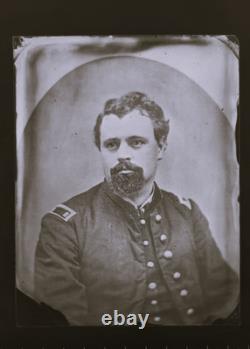
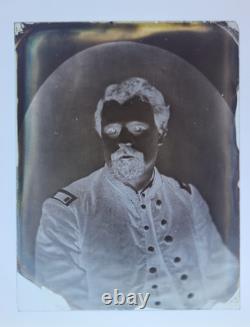
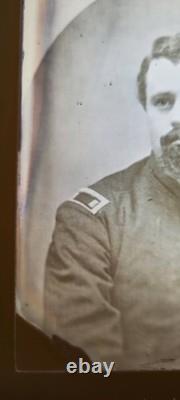
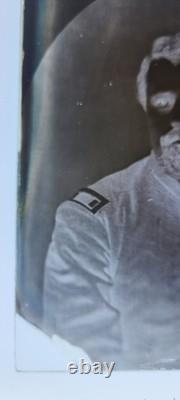
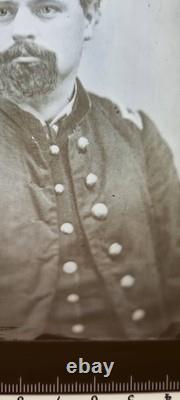
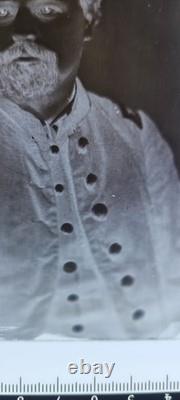
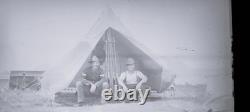
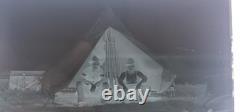
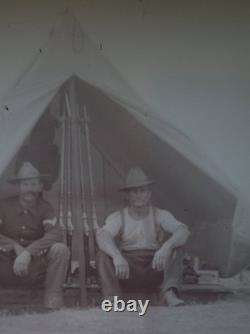
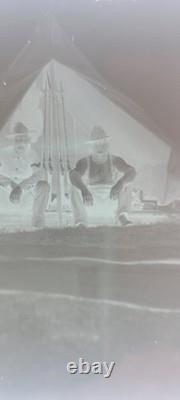
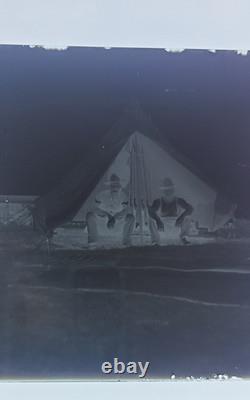
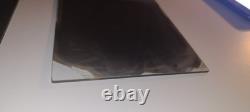
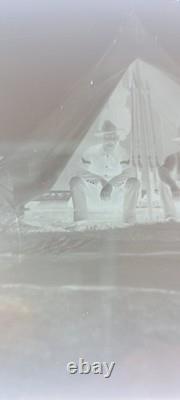
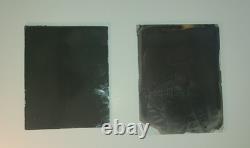
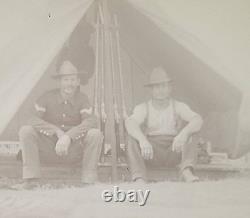

2-1860s Civil War Glass Negatives. Prendergast Bros St Paul MN. The soldiers captured in this archive are identified as members of the prominent Prendergast pioneer family of St. The on-field camp negative features. Who mobilized out of Fort Snelling, MN. His specialized rank as a logistics and supply sergeant perfectly explains the composition of the image, showing him stationed outside a heavily secured canvas field tent surrounded by a row of four military rifles. This is an incredible, named archive linking early Minnesota military deployment directly to the historic J. Prendergast estate of Irvine Park. Offered here is an elite, museum-grade archive consisting of.
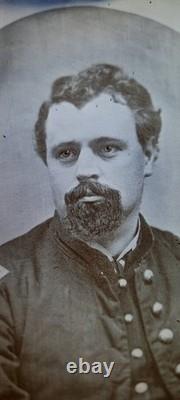
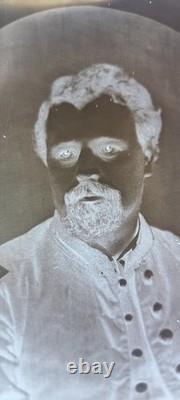
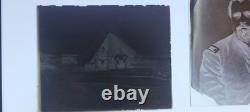
Two (2) original 1860s Civil War wet-plate collodion glass negatives. Directly from the estate of the historic. This lot features a striking half-plate studio portrait of a Prendergast soldier posing proudly in his full.
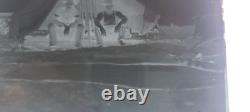
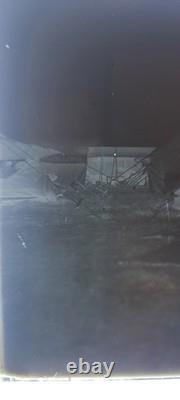
Capturing two soldiers outside their canvas field tent, surrounded by a dense web of ropes, with four military rifles standing upright behind them. Physical Specifications & Authenticity Markers. Two (2) Original 1860s Glass Plate Negatives. 4.25" x 5.5".
With rough, unpolished, hand-cut edges. Plate 2 (On-Field Tent Camp). 1.5mm and 1.6mm. Providing definitive proof of raw window glass cut down by hand inside a traveling darkroom wagon. The portrait plate is exceptionally sharp.
The camp plate features a clear but moody, darker low-light exposure-likely captured during evening dusk at mobilization camp. The crisp clarity indicates the soldiers held perfectly frozen for a long 15-20 second field exposure. Light age-appropriate edge wear is present on both plates. Provenance & The Historic Discovery. These plates represent an incredible, fresh-to-the-market historical discovery.
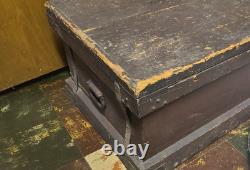
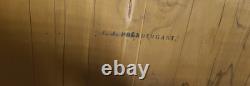
They were found untouched inside a solid pine Civil War footlocker belonging to. The chest was recently uncovered during a residential remodel of the family's estate near. The Prendergasts were an elite early Minnesota dynasty, and these military plates sat safely sealed inside their ancestor's wartime trunk for over a century. A photograph of the original find-site chest is included in the listing images for absolute authenticity verification. Historical Military & Business Context. The Soldier: Commissary Sergeant Michael R. The soldiers captured in this archive are members of the prominent Prendergast pioneer family.A vital elite rank responsible for logistics, rations, hardware, and camp layout. His specialized rank perfectly explains the unique composition of the camp photograph: he is stationed directly outside a highly secured canvas field supply tent, flanked by a row of four military long-arms. The canvas tents are pitched immediately adjacent to one another, surrounded by an intricate web of overlapping tie-down guy ropes, creating a dense infrastructure where soldiers could barely walk between company lines. This rare outdoor field negative is highly likely a document of the early volunteer regiments captured by famed St.
Or a direct contemporary working the Fort Snelling grounds. The Pioneer Business: Prendergast Bros. While Michael served in the field, his brother James J. Prendergast managed the home front, building one of St. Paul's earliest and most successful business empires.
The family was so wealthy and influential in early St. Paul that in 1881, the Prendergast brothers personally donated and installed the famous ornamental iron fountain that still sits at the center of Irvine Park. This archive bridges the gap between the gritty reality of Civil War mobilization and the massive commercial wealth of Gilded Age Minnesota pioneers.These irreplaceable glass artifacts will be treated with the highest level of archival protection.